
Earthing is easy to overlook because, when it works, nothing happens. That is the point: it is the safety system that makes faults harmless.
What earthing does
Every electrical installation needs a low-resistance path to the ground. When a live conductor touches a metal enclosure, the fault current flows through the earth conductor instead of through a person who touches it. That current is large enough to trip the circuit breaker or residual current device (RCD) and disconnect the supply within a fraction of a second.
Without a good earth, the enclosure can stay live at a dangerous voltage with nothing to disconnect it.
Earthing also:
- gives surge protection devices a path to divert voltage spikes,
- keeps sensitive electronics, data and communication equipment stable,
- lets the protection on transformers, generators and substations operate correctly.
What lightning protection does
A lightning protection system gives a strike a safe route to the ground: air terminals on the roof, down conductors on the building, and an earth termination network in the ground. It protects the structure from fire and physical damage. Surge protection devices at the distribution boards then protect the equipment inside from the induced surge.
Tall buildings, water towers, telecom masts, schools, fuel stations and buildings on exposed high ground are at the greatest risk.
Signs your earthing needs attention
- Mild shocks from metal appliances, taps or equipment casings.
- RCDs that trip repeatedly, or never trip when tested.
- Repeated damage to electronics after storms.
- Corroded, loose or missing connections at the earth pit.
- No record of an earth resistance test in recent years, or since major building or electrical works.
How it is tested
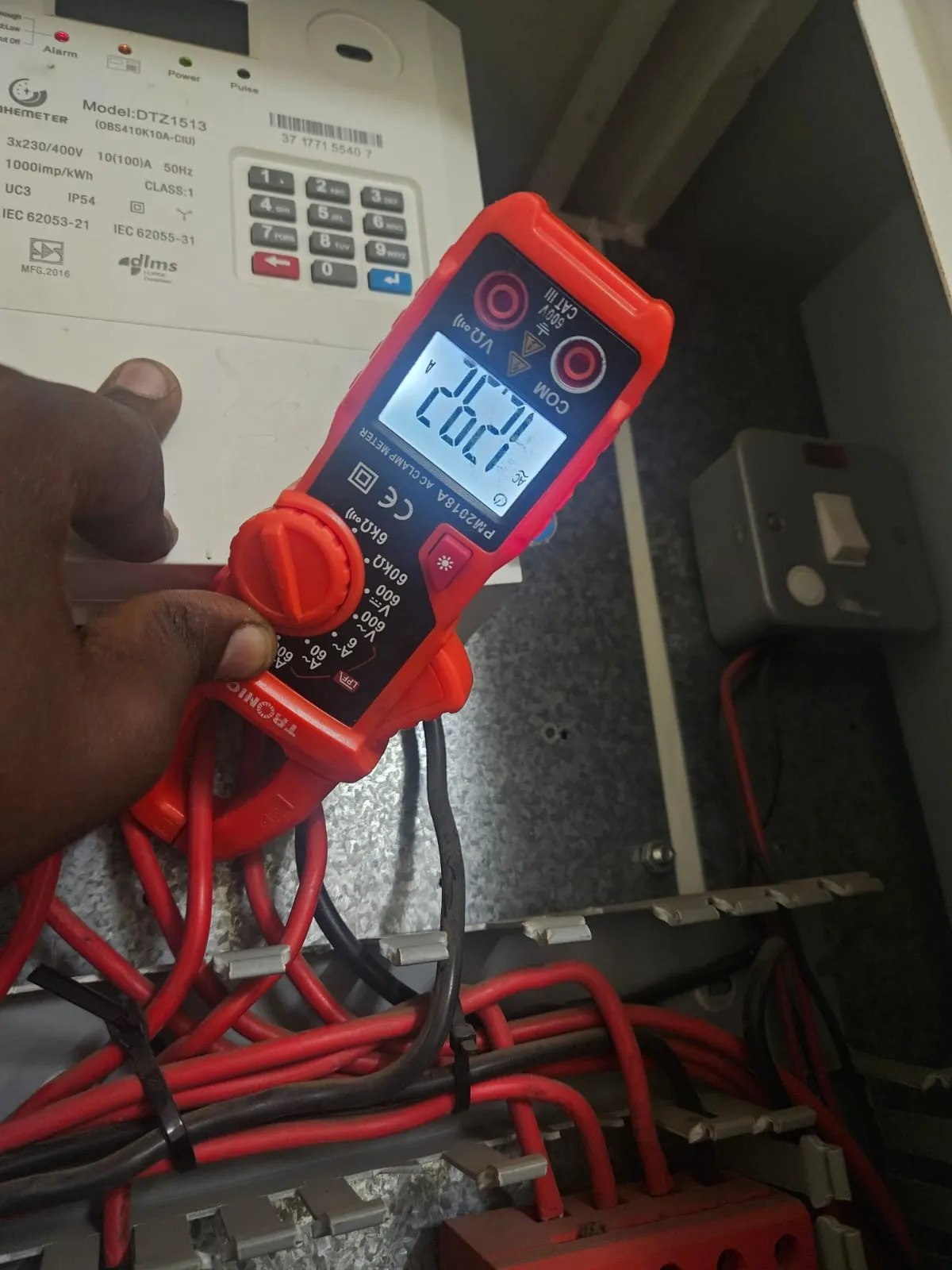
Earth electrode resistance is measured with an earth tester and compared with the value the design requires. Soil moisture changes through the year, so a reading taken in the wet season can look better than the dry-season reality. Electrodes also corrode over time, which is why earthing should be tested periodically, not only at installation.
We design, install and test earthing and lightning protection systems and issue a test report with every job. Book a test.
Planning a power or electrical project?
Tell us what you need and our engineers will arrange a site survey.